
Ferrous Sulphate Heptahydrate (99.5%) - India CAS: 7782-63-0
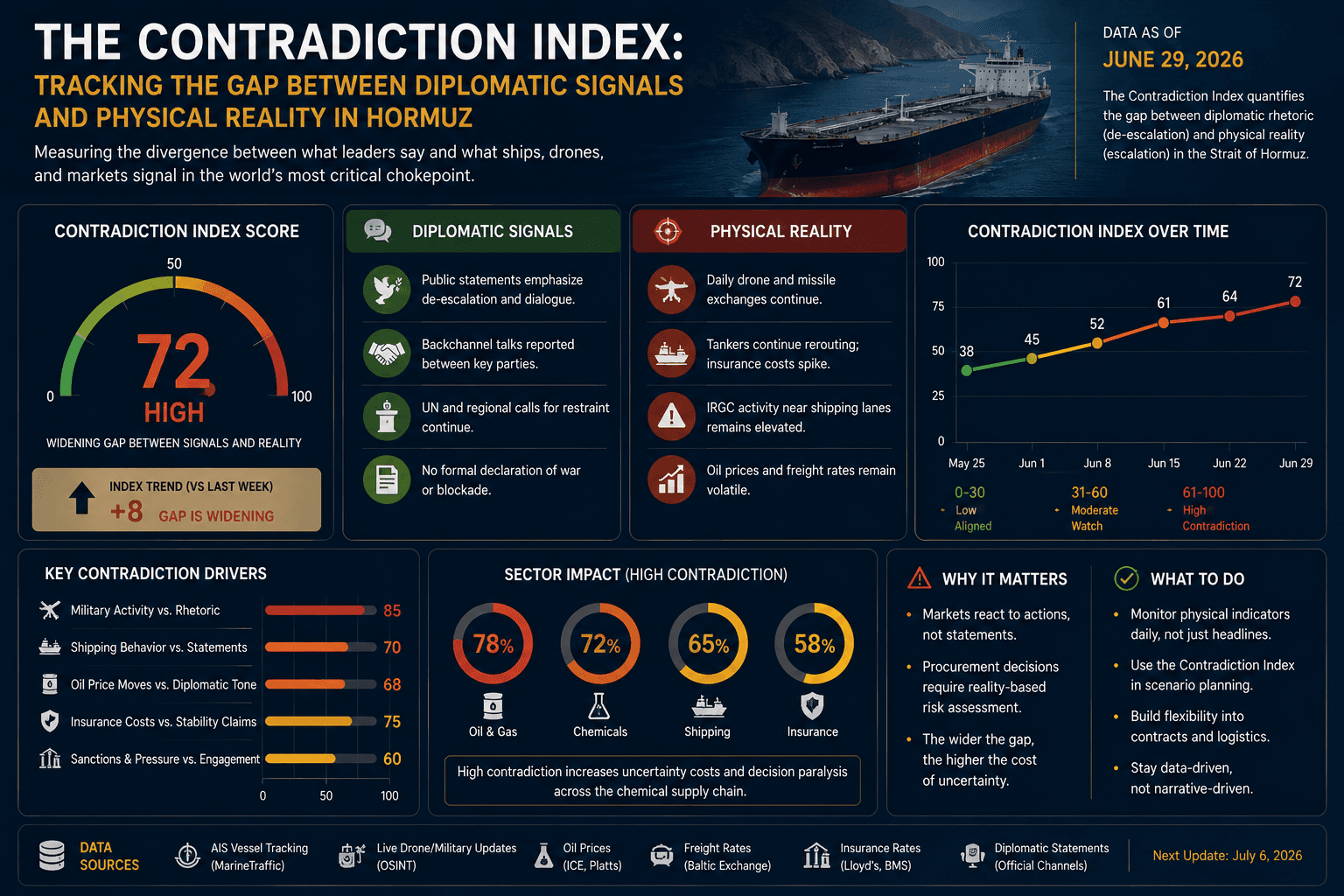
July 1 reveals the biggest contradiction of the Hormuz crisis so far: diplomacy suggests progress, but physical shipping data shows continued disruption. For chemical procurement professionals, understanding the gap between political signals and operational reality has become essential for making correct supply chain decisions.

Methanol supply has remained active through recent Gulf disruptions, with AIS vessel tracking showing continued commercial movement. Buyers should separate headline risk from physical flow data when planning Q3 procurement.
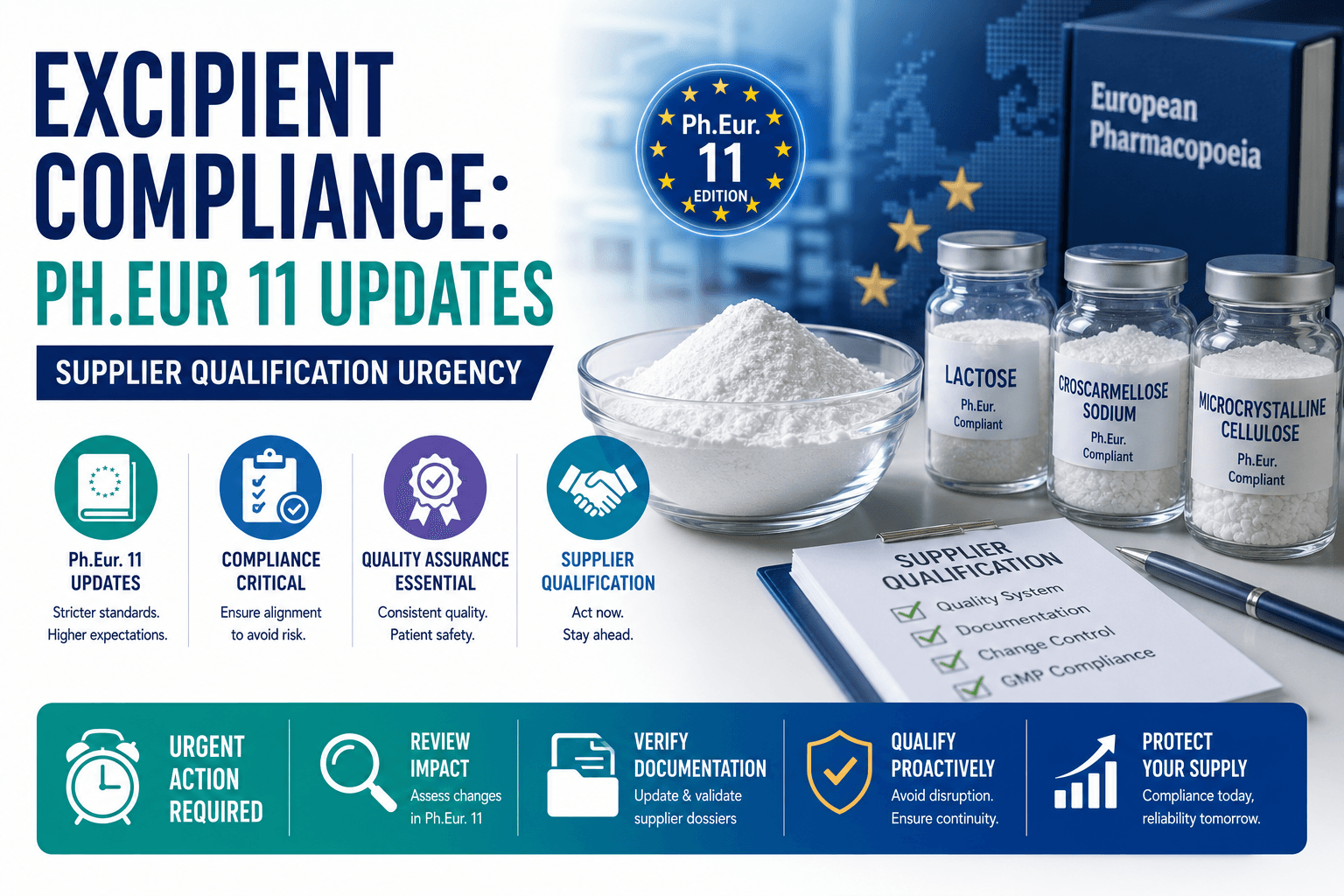
Ph.Eur 11 introduces updated compliance standards for pharmaceutical excipients in 2026, requiring suppliers to provide revised CoA documentation and updated testing procedures. Procurement teams should immediately verify supplier readiness to avoid regulatory and supply chain risk.

China’s expanding domestic petrochemical capacity helped replace Gulf PTA and paraxylene supply during recent disruptions. As Gulf exports begin returning, PTA buyers need to assess how new competition could affect pricing and sourcing strategies.

Rising freight rates and new customs requirements are increasing landed costs for OTC and consumer healthcare manufacturers. Procurement teams must reassess sourcing strategies and documentation compliance to avoid disruptions.
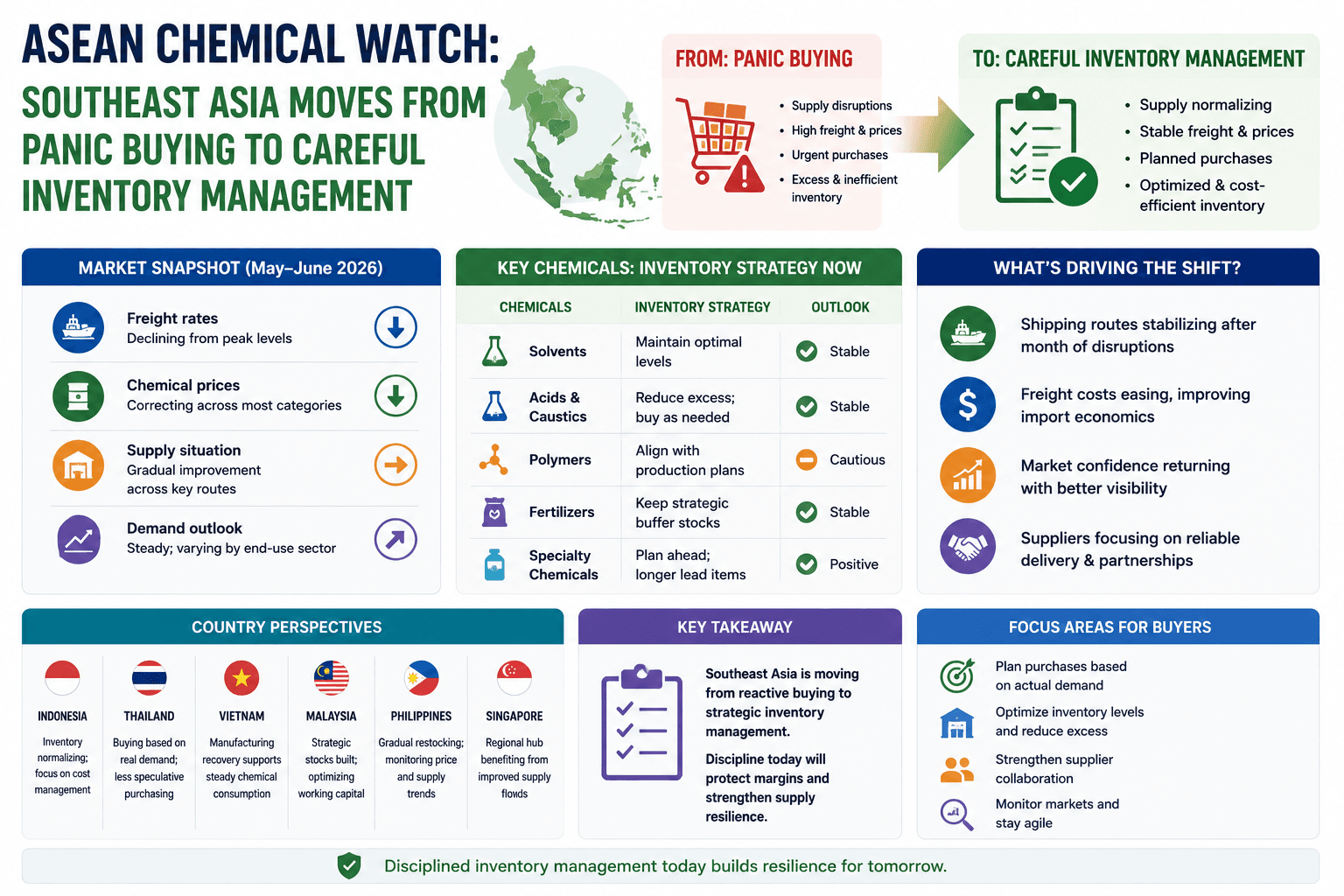
Southeast Asia’s chemical market has moved beyond panic buying after the Hormuz crisis, but persistent supply deficits, port congestion, and regional production disruptions are forcing buyers into more disciplined inventory management strategies.
Estamos comprometidos com sua privacidade. A Tradeasia usa as informações fornecidas para entrar em contato com você sobre conteúdos, produtos e serviços relevantes. Para mais informações, consulte nossa política de privacidade.