Overview of TSCA Reform 2026
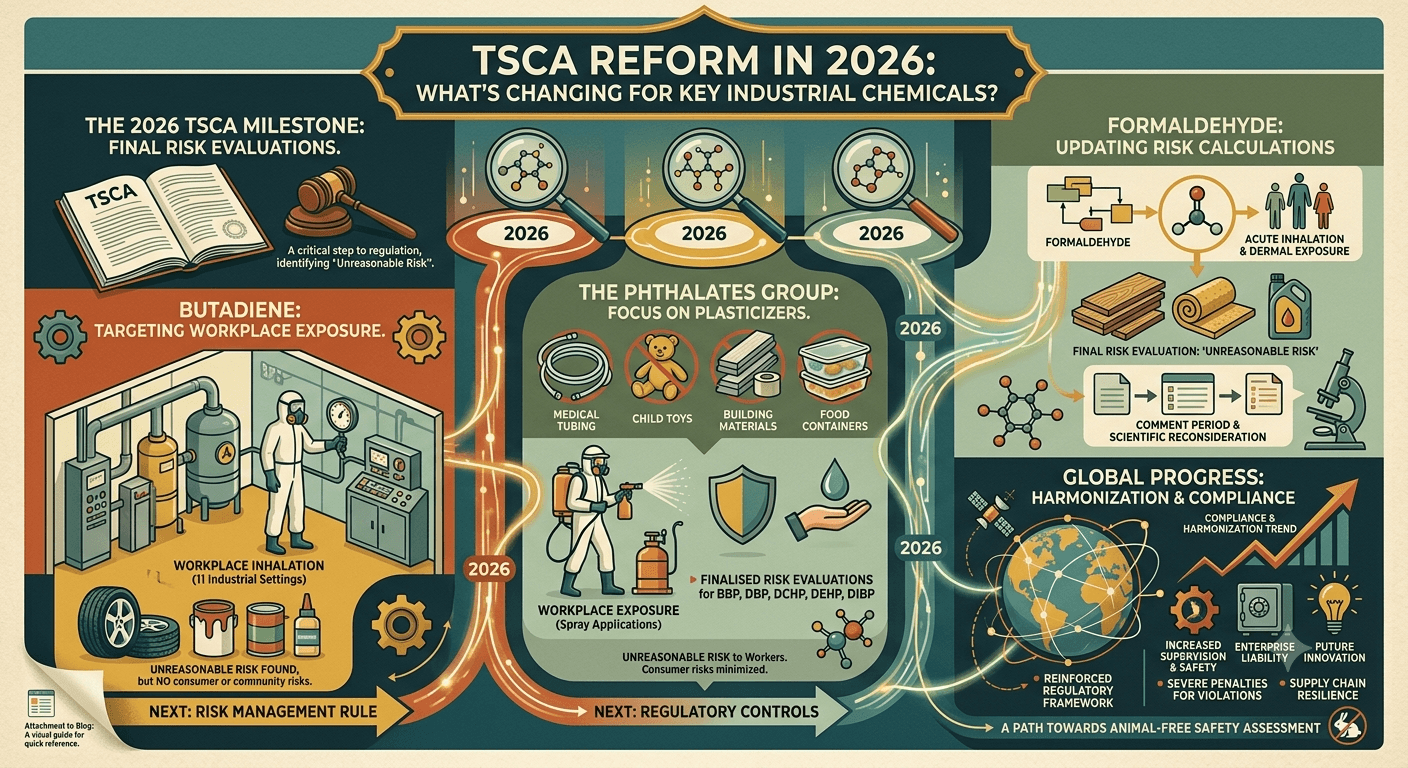
The U.S. Environmental Protection Agency (EPA) is set to overhaul its Toxic Substances Control Act (TSCA) framework in 2026. The reform focuses on improving transparency, strengthening risk assessment methods, and expanding the scope of chemicals subject to review. Key changes will affect high‑profile substances such as 1,3‑butadiene, phthalates, and formaldehyde.
Updated Risk Assessment for 1,3-Butadiene
EPA’s proposed risk assessment for 1,3‑butadiene now incorporates advanced epidemiological data and mechanistic studies. The new approach will:
- Use life‑cycle exposure models to capture real‑world scenarios.
- Employ quantitative structure‑activity relationships (QSAR) to predict carcinogenic potential.
- Require manufacturers to submit safety data early in the product development phase.
Companies producing or importing butadiene‑based products must prepare detailed exposure assessments and submit them to EPA by the 2026 deadline.
Phthalates Under Scrutiny
Phthalates, widely used as plasticizers, are facing stricter scrutiny. EPA’s updated risk assessment will:
- Implement a tiered testing protocol based on chemical structure.
- Set lower acceptable daily intake (ADI) thresholds for sensitive populations.
- Mandate labeling of phthalate content on consumer goods.
Manufacturers should review current formulations and explore alternative plasticizers to comply with the anticipated regulations.
Formaldehyde Risk Evaluation in Finalization
EPA is finalizing its risk assessment for formaldehyde, a known respiratory irritant and carcinogen. The final assessment will:
- Define stricter occupational exposure limits (OELs).
- Require continuous monitoring of formaldehyde levels in indoor environments.
- Encourage the development of low‑formaldehyde materials in the construction sector.
Businesses using formaldehyde in production or as a by‑product should begin risk mitigation plans now to avoid compliance gaps.
Implications of TSCA Fee Authority Renewal
The renewal of TSCA’s fee authority in 2026 means the EPA can recover costs from new chemical filings. This has two major implications:
- Higher fees for pre‑market submissions, potentially increasing the cost of bringing new chemicals to market.
- Expanded use of fee revenue to fund research and enforcement actions.
Companies should budget for increased filing fees and consider investing in early-stage risk assessments to reduce long‑term costs.
New Chemical Review Process
Under the reform, the New Chemical Review will be more proactive. Key features include:
- Mandatory pre‑market testing for chemicals with high production volumes.
- Public disclosure of risk assessment data within 90 days of submission.
- Enhanced stakeholder engagement through public comment periods.
Early engagement with EPA can streamline approvals and mitigate regulatory surprises.
Action Steps for Compliance
To navigate the updated TSCA landscape, businesses should:
- Conduct internal audits of current chemical inventories.
- Update safety data sheets (SDS) to reflect new risk thresholds.
- Engage with regulatory consultants to interpret new guidelines.
- Implement monitoring systems for exposure levels of regulated chemicals.
By proactively addressing these areas, companies can maintain market access and protect consumer health.