

Related Insights
Xinjiang's New Polypropylene Capacity: How China's Latest Expansion Strengthens Petrochemical Self-Sufficiency
Construction has begun on a 450,000-tonne polypropylene plant at the Xinjiang Shaneng Wucaiwan project, reinforcing China's long-term capacity expansion strategy. Procurement teams should evaluate how additional domestic production could reshape regional polymer supply and international trade flows.
Naphtha Supply Halted: How Asia's Petrochemical Makers Are Responding to Hormuz Disruptions
The disruption of naphtha shipments through the Strait of Hormuz has placed renewed pressure on Asia's petrochemical industry. Buyers of olefins, polymers and downstream petrochemicals should reassess feedstock exposure and supplier resilience as market conditions evolve.

SABIC’s Q3 Supply Calendar: Saudi Export Strategy Sets Global Chemical Prices
SABIC’s Q3 supply calendar has emerged as a key indicator for polymer and chemical flows worldwide, with Ras Tanura’s logistics network playing a pivotal role. The company’s allocation decisions influence pricing, inventory levels, and competitive dynamics across major export markets.

Venator’s Financial Distress Signals a White Pigment Shortage in H2 2026
Venator Materials’ looming debt restructuring could reduce European TiO2 output, tightening supply for coatings, plastics, and paper. With Gulf feedstock constraints and high shipping costs, the industry faces higher lead times and costs. Buyers must now assess supplier stability as a core procurement factor.
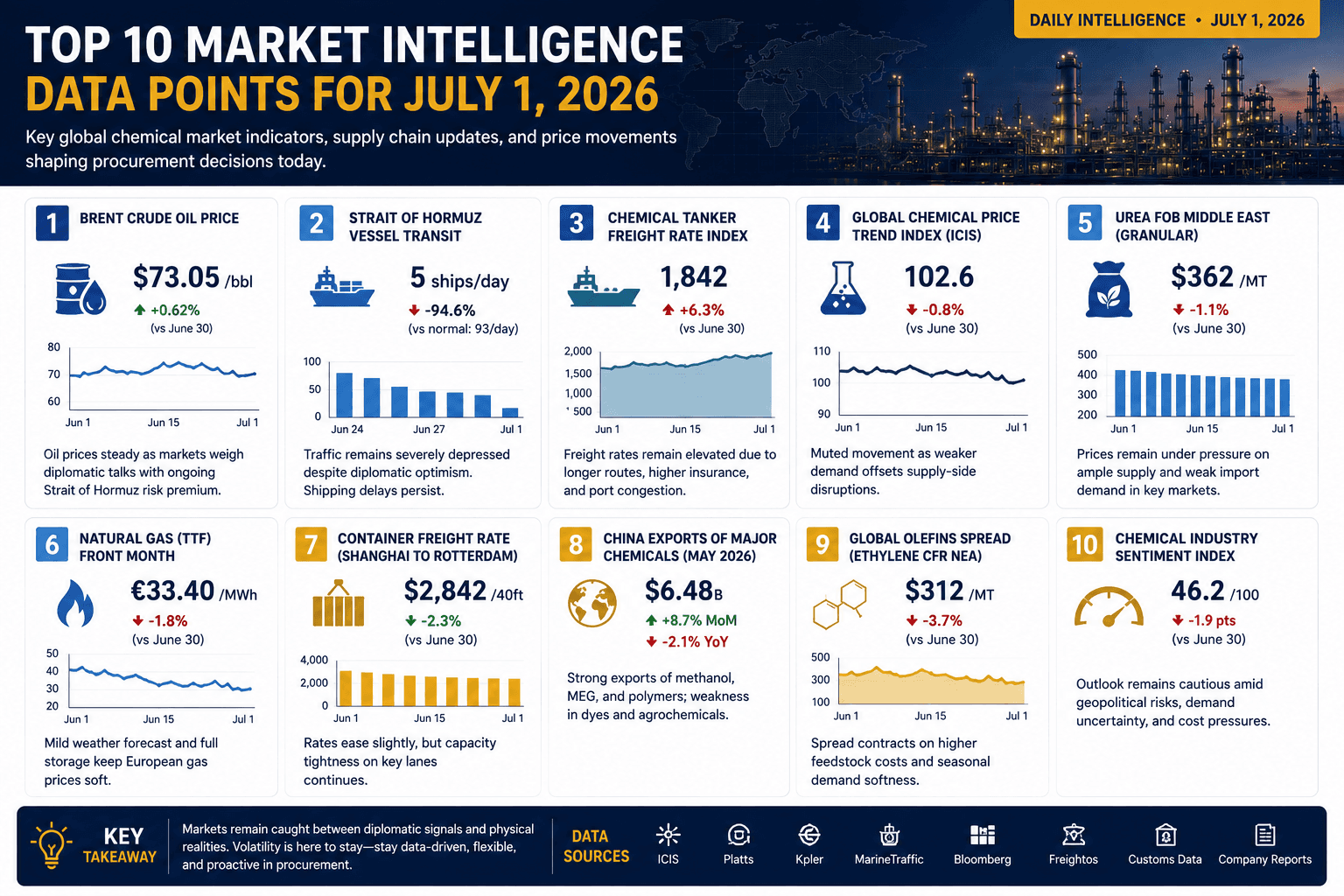
Top 10 Market Intelligence Data Points for July 1, 2026
July 1 begins H2 2026 with conflicting market signals for chemical procurement professionals. While oil prices remain stable and diplomacy improves, shipping disruption, insurance risk, new regulations, and supply chain bottlenecks continue shaping one of the most complex operating environments the chemical industry has faced all year.
Styrene and ABS Market Recovery in Q3 2026: Supply Returns but Procurement Risks Remain
Styrene and ABS markets are entering a recovery phase as feedstock availability improves and global production gradually increases. Procurement teams should understand how supply, regional trade and geopolitical uncertainty will influence purchasing decisions through the second half of 2026.
Don't miss out on our updates! Subscribe to our newsletter now
We're committed to your privacy. Tradeasia uses the information you provide to us to contact you about our relevant content, products, and services. For more information, check out our privacy policy.