
Boric Acid (99.9% Granular) - Peru CAS: 10043-35-3
Boric Acid (99.9% Granular) - Peru CAS: 10043-35-3

The withdrawal of the proposed 20% Hormuz cargo fee only days after it was announced highlights how quickly trade policy can change. Chemical procurement and compliance teams should document policy shifts and maintain flexible compliance processes to reduce operational risk.

Geopolitical tensions are disrupting more than oil and gas markets. Helium and fertilizer supply chains are also under pressure, making procurement planning increasingly important for manufacturers, distributors and agricultural suppliers.

Retailers are tightening their standards on synthetic food dyes, setting 2026‑2027 deadlines that force manufacturers to reexamine ingredient sourcing and reformulation strategies. The shift toward natural colorants and clean‑label compliance reshapes product development, cost structures, and supply chains. This article breaks down the commitments, impacts, and practical steps for food companies.

This week's specialty chemical intelligence highlights five procurement priorities, from supply chain resilience and helium planning to LABSA sourcing, biosurfactants, and regulatory readiness.

Singapore's PCS force majeure declaration reshaped supply planning for petrochemical buyers across Asia. As Middle East shipping conditions improve, procurement teams now face important decisions on contract renegotiation, delivery schedules and pricing.
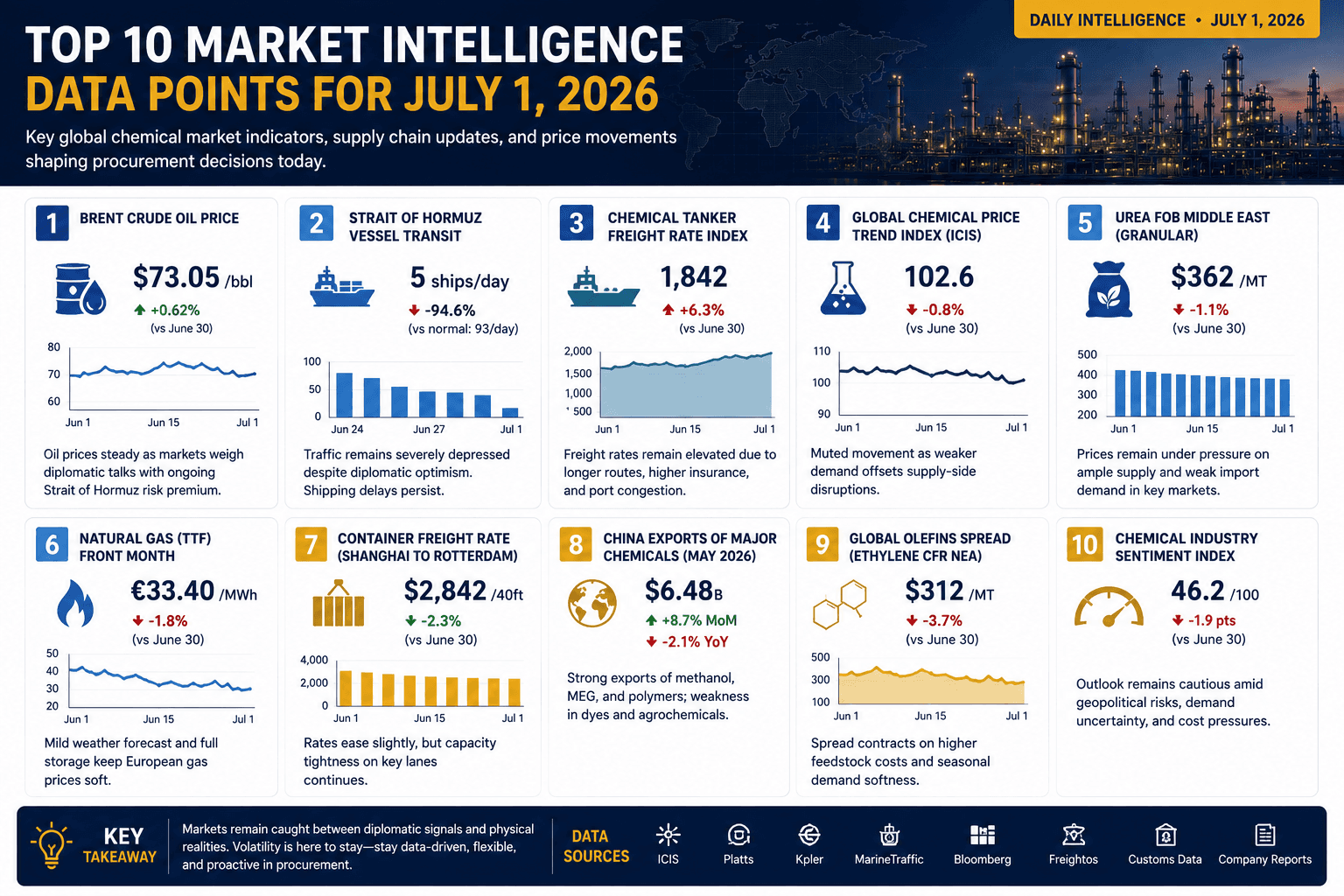
July 1 begins H2 2026 with conflicting market signals for chemical procurement professionals. While oil prices remain stable and diplomacy improves, shipping disruption, insurance risk, new regulations, and supply chain bottlenecks continue shaping one of the most complex operating environments the chemical industry has faced all year.
We're committed to your privacy. Tradeasia uses the information you provide to us to contact you about our relevant content, products, and services. For more information, check out our privacy policy.