Few pharmaceutical products have reshaped manufacturing economics as dramatically as GLP-1 therapies.
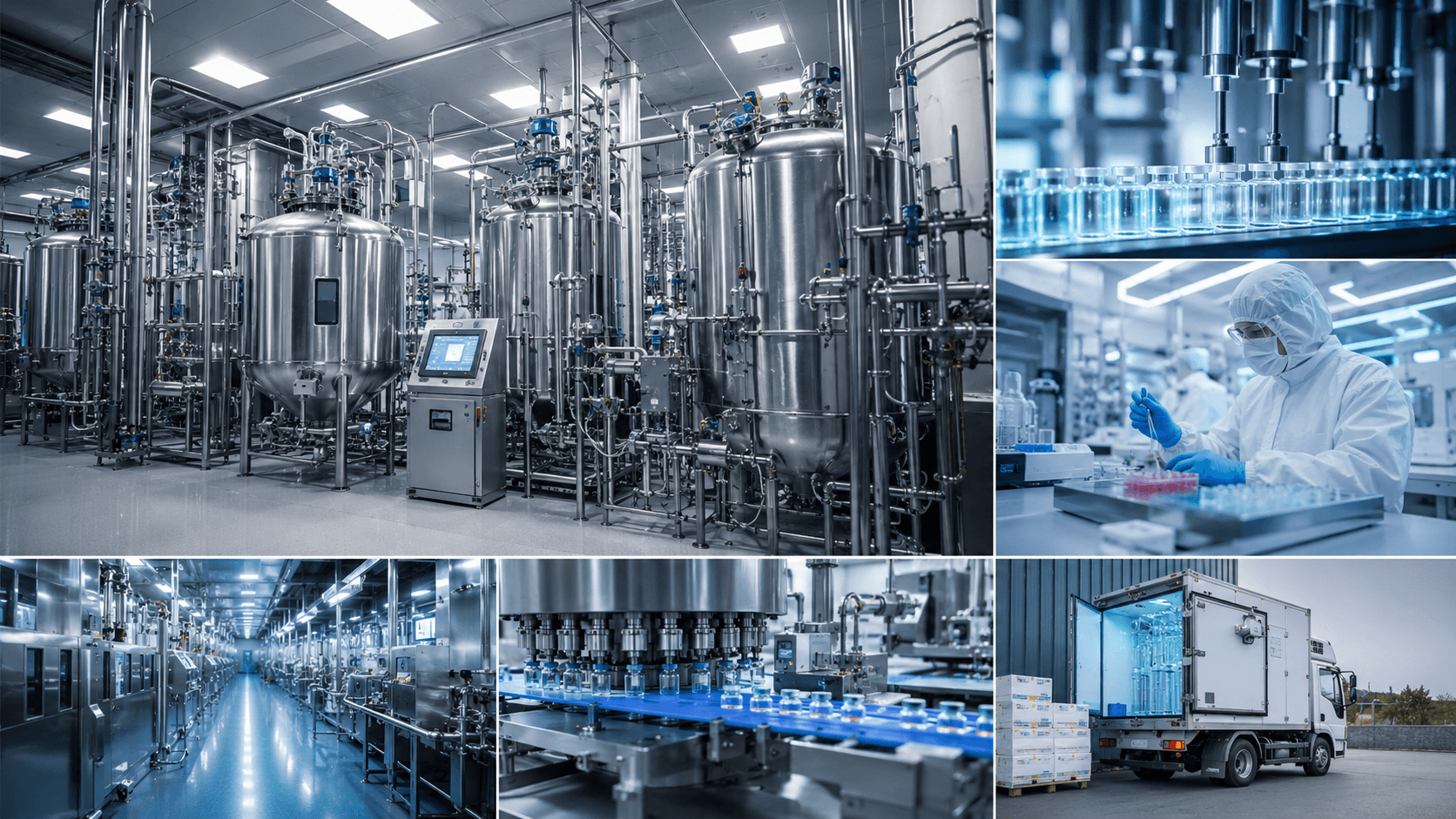
The extraordinary success of semaglutide and tirzepatide has transformed not only the obesity and diabetes treatment landscape but also the global pharmaceutical supply chain. Demand growth has exceeded virtually every industry forecast, creating unprecedented pressure across active pharmaceutical ingredient (API) production, peptide synthesis facilities, contract manufacturing organizations (CDMOs) and cold-chain logistics networks.
What began as a commercial success story has evolved into one of the largest pharmaceutical capacity challenges of the decade.
For procurement teams, the consequences extend far beyond GLP-1 products themselves.
Why GLP-1 Demand Has Changed the Industry
The scale of growth is difficult to overstate.
Demand for GLP-1 therapies has accelerated due to:
Rising obesity treatment adoption.
Expanding diabetes treatment usage.
Growing reimbursement coverage.
Increasing physician acceptance.
Strong patient outcomes.
The result is a pharmaceutical market consuming production capacity at a pace rarely seen in modern healthcare.
Unlike traditional small-molecule drugs, GLP-1 therapies rely on highly specialized manufacturing systems that cannot be expanded overnight.
This creates bottlenecks throughout the value chain.
The API Capacity Bottleneck
The most immediate challenge remains API production.
Manufacturing GLP-1 APIs requires:
Specialized peptide chemistry.
Advanced purification systems.
Highly regulated production environments.
Extensive quality control procedures.
Expanding capacity involves:
Facility construction.
Regulatory approvals.
Equipment qualification.
Workforce training.
These processes often require years rather than months.
As a result, API capacity remains one of the most constrained elements of the supply chain.
Peptide Synthesis Has Become a Strategic Asset
At the center of the GLP-1 manufacturing challenge lies peptide synthesis.
Peptide production is fundamentally different from conventional pharmaceutical manufacturing.
Requirements include:
Specialized reagents.
Complex synthesis steps.
High-purity processing.
Advanced analytical testing.
The rapid expansion of GLP-1 demand has absorbed significant portions of global peptide manufacturing capacity.
This has created competition not only among GLP-1 producers but also among other pharmaceutical companies requiring peptide-based products.
CDMOs Are Under Extraordinary Pressure
Contract Development and Manufacturing Organizations (CDMOs) have become critical players in the GLP-1 ecosystem.
Many pharmaceutical companies rely on CDMOs for:
API production.
Peptide synthesis.
Process development.
Fill-finish operations.
Packaging services.
The surge in GLP-1 demand has created intense competition for available manufacturing slots.
Consequences include:
Longer lead times.
Capacity reservation requirements.
Higher manufacturing costs.
Reduced flexibility for new projects.
For biopharma procurement teams, securing CDMO access is increasingly becoming a strategic priority.
Fill-Finish Operations Are Another Constraint
Even after APIs are produced, additional bottlenecks remain.
Injectable GLP-1 products require:
Sterile filling.
Specialized packaging.
Device assembly.
Quality testing.
Fill-finish facilities were already operating under pressure before the GLP-1 boom.
The additional demand has pushed many providers close to practical capacity limits.
This creates another potential point of supply chain vulnerability.
Cold-Chain Logistics Faces Growing Pressure
The challenge extends beyond manufacturing.
Many GLP-1 products require temperature-controlled transportation and storage.
Cold-chain systems must support:
API shipments.
Finished products.
Distribution networks.
Healthcare delivery systems.
As volumes increase, demand for refrigerated logistics infrastructure continues to rise.
This includes:
Temperature-controlled warehousing.
Specialized transportation providers.
Monitoring systems.
Distribution hubs.
Logistics capacity is becoming a strategic factor alongside manufacturing capacity.
The Ripple Effect Across Biopharma
One of the most important consequences of the GLP-1 boom is its impact on unrelated pharmaceutical programs.
Capacity absorbed by GLP-1 production is no longer available for:
Other peptide therapeutics.
Specialty biologics.
Clinical development projects.
Emerging drug platforms.
This creates indirect supply chain effects across the broader pharmaceutical industry.
Companies not directly involved in obesity or diabetes treatments may still experience:
Longer manufacturing lead times.
Increased costs.
Reduced CDMO availability.
Procurement challenges.
Which Parts of the Supply Chain Are Most Vulnerable?
Current risk levels can be broadly categorized as follows:
Highest Risk
Peptide synthesis capacity.
GLP-1 API manufacturing.
Specialized CDMO slots.
Sterile fill-finish operations.
Moderate Risk
Cold-chain logistics.
Packaging components.
Analytical testing services.
Lower Risk
Conventional excipients.
Standard pharmaceutical packaging materials.
Non-specialized logistics services.
Understanding these risk categories helps procurement teams prioritize mitigation efforts.
A Procurement Stress-Test Checklist
Biopharma procurement teams should evaluate:
Manufacturing Exposure
How dependent are we on shared peptide manufacturing capacity?
CDMO Concentration Risk
Do we rely on a single provider?
Lead-Time Risk
What happens if production slots are delayed?
Logistics Risk
Is cold-chain redundancy available?
Supplier Diversification
Are alternative qualified sources available?
Organizations that cannot answer these questions may be more vulnerable than they realize.
What Happens Next?
The industry is responding aggressively.
Current initiatives include:
New peptide manufacturing facilities.
CDMO expansion projects.
Additional fill-finish investments.
Cold-chain infrastructure upgrades.
Process efficiency improvements.
However, capacity additions take time.
Demand growth continues today, while many new facilities will not become operational for several years.
This suggests that supply chain tightness may remain a defining characteristic of the GLP-1 market throughout the remainder of the decade.
The Bottom Line
The GLP-1 revolution has created one of the largest pharmaceutical supply chain disruptions in recent memory. Explosive demand for semaglutide and tirzepatide has absorbed manufacturing capacity across peptide synthesis, API production, CDMO operations and cold-chain logistics networks.
For biopharma procurement teams, the lesson is clear: GLP-1 capacity constraints are no longer confined to obesity and diabetes therapies. Their effects are rippling across the broader pharmaceutical ecosystem, influencing manufacturing availability, lead times and supplier strategies.
Companies that proactively stress-test supply chains, diversify manufacturing partners and secure capacity early will be better positioned to navigate a market where demand continues to outpace available infrastructure.
2-Ethylhexyl Acrylate CAS: 103-11-7