
Methanol futures reached CNY 3,370 per tonne, marking the highest level since October 2021 and creating new pressure across global chemical supply chains. The surge reflects a major supply disruption linked to reduced flows through the Strait of Hormuz, a key route for methanol exports from the Middle East.
The market is now watching whether a US-Iran ceasefire agreement can restore trade confidence or whether buyers should prepare for extended supply tightness. For companies purchasing methanol for formaldehyde production, olefins manufacturing and fuel blending, the timing of procurement decisions has become increasingly important.
What Is Methanol and Why Does the Market Depend on It?
Methanol is one of the most widely traded industrial chemicals and serves as a basic building block for multiple downstream applications. It is commonly produced from natural gas through a process that converts methane into synthesis gas before creating methanol through catalytic conversion.
The chemical plays a central role in several value chains because manufacturers use it as both a feedstock and an energy-related product. Demand comes from industries including:
Formaldehyde producers rely on methanol as a primary raw material for resins, adhesives and engineered wood products.
Olefin manufacturers use methanol-to-olefins technology to produce key plastics intermediates such as ethylene and propylene.
Fuel markets use methanol in blending applications and as a potential lower-emission fuel component.
The global methanol market depends heavily on large-scale producers with access to affordable natural gas. This makes regions with strong energy resources critical suppliers for international buyers.
Global Methanol Supply Pressure in 2026
The recent price movement shows how quickly geopolitical events can affect chemical markets. Iran represents a major methanol supplier, particularly for Asian buyers, and disruptions around the Strait of Hormuz created concerns about export availability.
China, the world’s largest methanol consumer, depends significantly on imported supply. Reduced shipments from Middle Eastern producers can immediately influence inventory levels, import costs and domestic pricing.
The market reaction has been driven by several factors:
Lower availability of seaborne cargoes increased competition among buyers looking for replacement volumes.
Traders adjusted positions as uncertainty increased around future shipments.
Buyers began reviewing alternative suppliers to reduce dependence on high-risk trade routes.
A temporary reduction in supply can create large price movements because chemical buyers often operate with limited inventory buffers. When producers and distributors expect uncertainty, they may delay selling available volumes or increase offers.
Key Price Drivers Shaping Methanol Futures
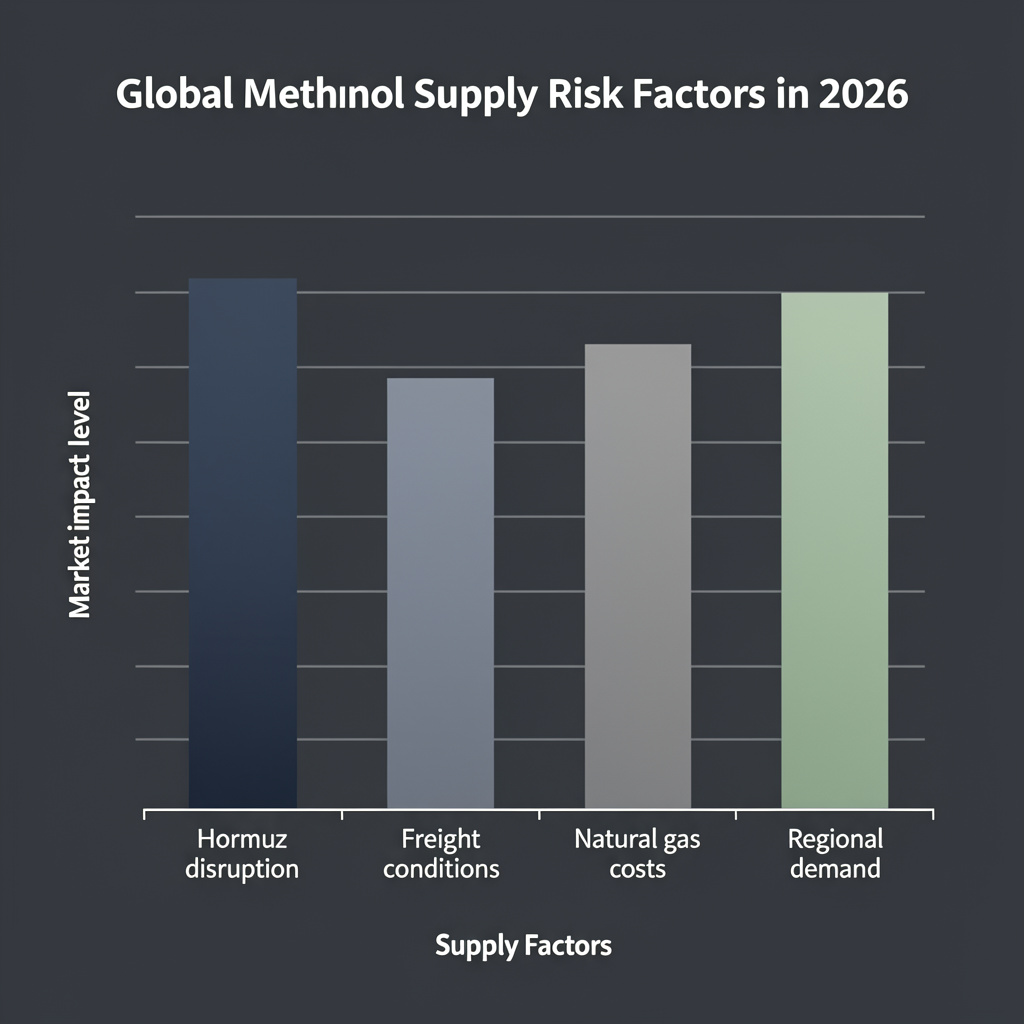
Methanol pricing does not depend on one factor alone. Energy markets, logistics conditions, regional demand and production costs all influence the final price buyers pay.
The current price environment reflects several important drivers:
Natural gas costs: Methanol production economics remain closely linked to natural gas availability and pricing because gas is the primary feedstock in many production regions.
Shipping conditions: Any disruption affecting major maritime routes can increase freight costs and limit available cargoes.
Regional inventory levels: Lower inventories often encourage buyers to secure additional material quickly, supporting stronger prices.
Downstream demand: Demand from formaldehyde, plastics and fuel sectors affects how quickly supply balances recover.
Procurement teams should also consider contract structures. Spot purchasing can expose buyers to sudden price changes, while longer-term agreements may provide more stability during uncertain periods.
Top Producing Regions and Global Trade Flow Changes
The global methanol trade depends on a network of producers across the Middle East, Asia, North America and other regions. Middle Eastern producers have traditionally held a strong position due to competitive energy costs and large production facilities.
Major supply regions include:
The Middle East, where producers benefit from access to natural gas resources and large export terminals.
China, which operates significant methanol production capacity but also imports material to support domestic demand.
North America, where shale gas availability supports competitive chemical production.
Southeast Asia and other Asian markets, which participate in both production and consumption.
The Strait of Hormuz remains strategically important because a significant share of energy and chemical cargo movement passes through this region. Even when physical supply continues through alternative routes, longer shipping distances can affect delivery schedules and freight economics.
Supply Chain Risks and Sourcing Challenges for Buyers
Methanol buyers now face a more complex procurement environment. The challenge is not only finding available material but also balancing price, reliability and supplier risk.
Companies sourcing methanol should evaluate:
Supplier diversification across multiple regions to avoid overdependence on one export corridor.
Inventory planning that matches production requirements without creating unnecessary storage costs.
Contract flexibility that allows adjustments during periods of market volatility.
Logistics visibility from producer loading points to final delivery locations.
The possibility of partial supply restoration after the Hormuz ceasefire agreement has created uncertainty. Some buyers may expect prices to ease if exports recover, while others remain cautious because full shipping normalization may take longer.
How Procurement Teams Should Evaluate Methanol Contracts
A high-price environment creates difficult decisions. Buyers must decide whether securing current supply provides protection or whether waiting could create savings if market conditions improve.
A balanced approach includes reviewing:
Current inventory coverage and the impact of potential supply delays.
Alternative suppliers and the quality requirements needed for specific applications.
Forward contracts compared with short-term purchases.
Regional price differences and transportation costs.
Procurement managers should avoid making decisions based only on short-term price movements. Methanol markets can react quickly to geopolitical developments, but production constraints and logistics changes often take longer to resolve.
Regulatory and Sustainability Factors Affecting Methanol Demand
Methanol is receiving increased attention as industries look for lower-carbon solutions. Interest in alternative production methods, including renewable methanol pathways, continues to grow as companies evaluate future energy and chemical strategies.
Traditional methanol production remains dominant, but sustainability goals are influencing investment decisions across the sector. Companies are increasingly assessing:
Carbon intensity of production methods.
Renewable feedstock availability.
Emission reduction targets across supply chains.
Customer requirements for lower-carbon materials.
These factors may influence future demand patterns, especially in industries where environmental reporting and carbon management have become important purchasing considerations.
Methanol Market Outlook for 2027 and Beyond
The next phase of the methanol market will depend on how quickly trade routes stabilize and whether production flows return to normal levels. The expected improvement in Hormuz conditions may reduce immediate pressure, but supply recovery could remain gradual.
UAE energy officials have indicated that full Hormuz flow recovery may not happen until 2027, meaning buyers may continue to manage uncertainty even after short-term tensions decline.
Future market conditions will likely depend on:
Recovery of Middle Eastern exports.
Growth in methanol demand from emerging industrial applications.
Expansion of alternative production capacity.
Changes in energy prices and transportation costs.
For global buyers, flexibility will remain a key advantage. Companies with diversified supplier networks and proactive planning will be better positioned to manage future price cycles.
The Bottom Line for Procurement Teams
Methanol futures have entered a period where supply security matters as much as price. The recent move to CNY 3,370 per tonne highlights how quickly regional disruptions can influence global chemical markets.
Procurement teams should focus on supplier reliability, contract strategy and market monitoring rather than reacting only to daily price changes. A careful balance between immediate sourcing needs and longer-term supply planning can help companies manage volatility.
The methanol market may experience relief if trade routes improve, but uncertainty around full supply recovery means buyers should continue evaluating their options. Ready to source Methanol from verified global suppliers? Explore competitive offers on our platform today.
Methanol CAS: 67-56-1